

Gneiss
Gneiss is a tough, hard, coarse-grained metamorphic rock composed of the same minerals as granite (quartz, feldspar and mica) but with alternating bands of light and dark minerals.
In Gneiss the minerals are arranged into layers that appear as bands in cross section. The darker bands have minerals such as magnesium or iron and lighter bands contain silicate minerals (aluminium, sodium, potassium, etc). Although gneiss and granite have similar properties (resistance, hardness, durability), they have different textures and finishes. The foliated texture of this stone combines light and dark minerals. The colours are very variable, generally alternating lighter and darker discontinuous bands (white, pink or grey).
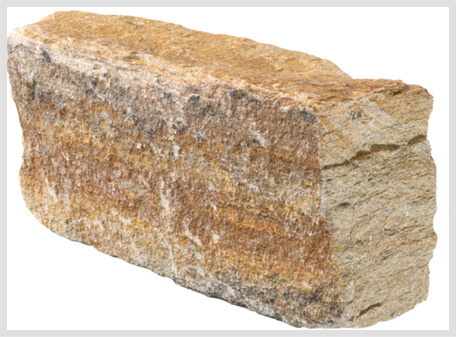
Gneiss is formed at high pressure from another metamorphic rock called schist, which itself started out life as a sedimentary rock called shale. As a result of the pressures it is formed at it is very tough and hard.
The ribbons or stripes of different coloured minerals running through gives it a sparkle, its name comes from a German noun meaning spark.
Gneiss can be used for interior and exterior spaces in buildings, walls and landscaping. Interior uses of this stone are kitchen or bathroom countertops, decorative walls, flooring or interior decoration. Exterior uses are garden decoration, paving stone, facades or building stone. Many types of this rock are the building blocks of structures from ancient times.
Kavalas Slate
Hand cut Kavala’a slate is a Greek stone that is excavated at the foot of Kavala’s Pageo mountain. The slate’s main properties are: its significant durability, great resistance against freezing and heating, minimal degree of weathering (0.4%), low water absorption. In addition, its natural characteristics give it non slip properties and it is highly resistant to bacteria such as green fungal infestation which can significantly increase the chances of slipping when wet.
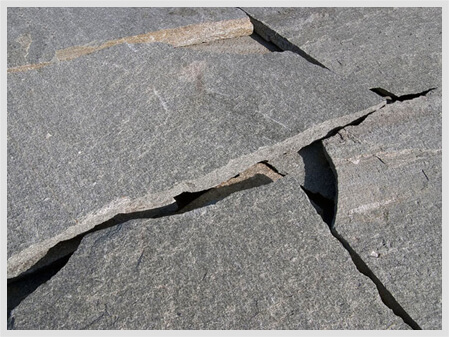
All the above in conjunction with its natural look and colours make it an excellent product for internal or external uses.
Sandstone
Our Dorada Urbion sandstone is mined in the Burgos region of Spain
It is a attractive buff colourerd sandstone of great hardness and versatility, which is used in all types of paving, walling and cladding, and bespoke architectural pieces.
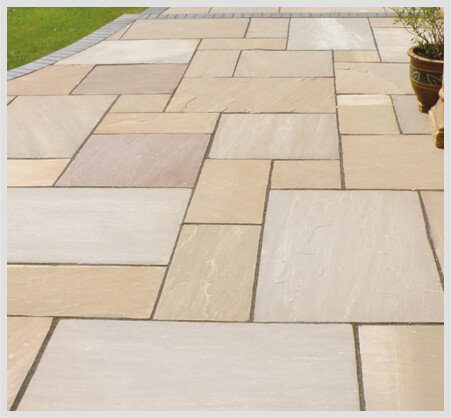
The paving is smooth and sawn on all 6 sides, meaning that the 4 edges are also straight and machine-cut with a smooth finish to complete the contemporary look. Sawn sandstone paving offers an entirely different appeal to riven sandstone and features more pronounced patterns and colours. Our sawn sandstone has a good level of natural slip resistance and, as long as the paving is maintained, the stone will retain its grip underfoot. We advise taking the usual care and precautions when walking on the slabs when wet, but the slabs are not known to be slippery and are designed specifically for outdoor use.
 Search
 Favorites
 Cart
Cart